
Hobbies That You Must Develop for SSB

Preparing for the SSB interview is not only about improving your knowledge, fitness, or communication skills. Your personality, interests, habits and everyday activities also play an important role in how you present yourself.
One area that many defence aspirants often overlook is hobbies.
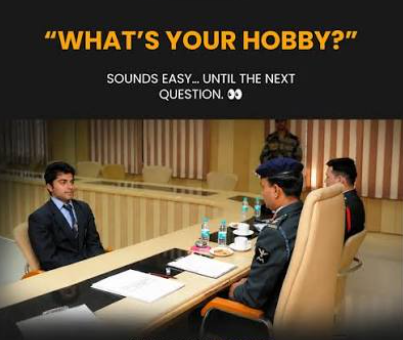
During the SSB interview, you may be asked questions about your hobbies, interests and how you spend your free time. The purpose is not simply to check whether you have an interesting hobby. The Interviewing Officer may want to understand how genuinely you pursue your interests, how much you know about them and what you have learned through them.
This is why candidates should not randomly choose an impressive-sounding hobby just before their SSB.
Instead, develop genuine interests that you can regularly practise and confidently discuss.
Why Are Hobbies Important in SSB?
A hobby gives the Interviewing Officer another way to understand your personality.
For example, someone who regularly plays a sport may develop teamwork, discipline and competitiveness. Someone who reads regularly may develop curiosity and awareness. A person interested in photography may develop observation and creativity.
Your hobby itself does not automatically prove that you have a particular quality. What matters is how genuinely you pursue it and what you have learned from it.
The IO may ask:
How long have you been following this hobby?
Why did you choose it?
How frequently do you practise it?
What do you know about it?
Who is your favourite player, author, artist or personality?
What have you learned from this hobby?
What challenges have you faced?
Can you explain your recent experience related to it?
Therefore, your hobby should be something you actually know about.
1. Reading
Reading is one of the easiest hobbies to develop consistently.
You do not need to read only defence-related books. You can explore:
Biographies
History
Current affairs
Fiction
Non-fiction
Science
Psychology
Leadership
Travel writing
The important thing is consistency.
If you mention reading as your hobby, be prepared to discuss the books you have recently read, your favourite author and what you learned from them.
For SSB preparation, reading can also improve your vocabulary, awareness and ability to express your thoughts.
2. Sports
Sports are excellent activities for developing an active lifestyle.
You can choose a sport based on your genuine interest, such as:
Football
Cricket
Basketball
Badminton
Volleyball
Athletics
Swimming
Table tennis
Sports can teach you about discipline, teamwork, competition and handling both success and failure.
However, don't claim a sport as your hobby simply because it sounds good in an interview.
If cricket is your hobby, for example, you should know the basic rules, important tournaments, your favourite team or player and recent developments in the sport.
3. Fitness and Outdoor Activities
Fitness can become a regular interest rather than just an SSB preparation activity.
Running, cycling, trekking, hiking or regular workouts can help you develop an active routine.
Outdoor activities are particularly useful because they encourage you to spend time away from screens and become more comfortable with physical challenges.
If you enjoy trekking, you could discuss places you have visited, difficulties you faced and how you planned your trips.
The experience behind the hobby is often more valuable than simply mentioning its name.
4. Writing or Journaling
Writing can be a useful hobby for candidates who enjoy expressing their thoughts.
You could maintain:
A personal journal
Short stories
Poetry
Articles
Travel notes
Personal reflections
Regular writing can help you organise your thoughts and communicate ideas more clearly.
If you mention writing during your interview, be ready to explain what you write about, how often you write and what motivates you.
5. Photography
Photography is another hobby that can be developed without expensive equipment.
You can begin with a smartphone and learn about:
Composition
Lighting
Framing
Perspective
Basic editing
Photography can encourage you to observe your surroundings more carefully.
If it is your genuine hobby, you can also maintain a small collection of your best photographs and learn about the technical side of photography.
6. Music
Music can be a genuine and enjoyable hobby.
You could develop an interest in:
Singing
Playing an instrument
Music production
Listening to a particular genre
Learning music theory
If you play an instrument, practise consistently rather than simply mentioning it in your PIQ.
An interviewer may ask you about your favourite musicians, genre, instrument, learning experience or even basic technical concepts.
7. Learning a New Skill
A hobby does not necessarily have to be a traditional activity.
Learning a new skill can also become a genuine interest.
Examples include:
Coding
Graphic design
Cooking
Video editing
Public speaking
Drawing
Digital art
Learning a language
The key is regular practice.
For example, if you say coding is your hobby, you should be able to explain what you have built, what technologies you use and what problems you have solved.
8. Cooking
Cooking is a practical hobby that many candidates can develop at home.
You can start with simple dishes and gradually learn:
Basic cooking techniques
Nutrition
Meal planning
Different cuisines
Kitchen safety
It can also encourage independence and planning.
If cooking is your hobby, don't just memorise the names of dishes. Actually prepare them and learn the process.
9. Volunteering and Community Activities
Helping at community events, teaching younger students or participating in social activities can become meaningful interests.
These activities can expose you to different people and situations.
More importantly, they give you real experiences that you can discuss during an interview.
If you mention volunteering, be honest about your actual involvement and responsibilities.
10. Travel and Exploring New Places
If you genuinely enjoy travelling, it can become a good hobby.
Travel exposes you to:
Different cultures
Food
Languages
Geography
People
New situations
But simply saying "I like travelling" is not enough.
Know the places you have visited and be able to talk about what you observed, what you learned and how you handled unexpected situations.
What Makes a Good SSB Hobby?
A good hobby does not have to be unusual or impressive.
It should ideally be:
Genuine
You should actually enjoy doing it.
Consistent
You should have spent enough time developing the interest.
Knowledge-Based
You should know the basics and be able to discuss it naturally.
Practical
You should have real experiences related to it.
Sustainable
Choose something you can continue even after the SSB interview.
Don't Create a Fake Hobby for SSB
This is one of the biggest mistakes candidates make.
Some aspirants suddenly write "reading", "trekking", "chess" or "photography" in their PIQ because they believe these hobbies will create a good impression.
The problem starts when the IO asks follow-up questions.
If you have written chess as your hobby but don't know basic openings, tournaments or your own playing experience, the inconsistency can become obvious.
The goal of SSB is not to create a perfect personality on paper.
Be genuine.
How to Develop a Hobby Before SSB
If you currently don't have a regular hobby, don't panic.
You can start with something simple.
Step 1: Identify What You Actually Enjoy
Think about what you naturally do when you have free time.
Do you enjoy reading? Playing sports? Cooking? Taking photographs? Writing? Music?
Start there.
Step 2: Choose One or Two Activities
You don't need ten hobbies.
Pick one or two activities that genuinely interest you.
Step 3: Practise Regularly
Even 20–30 minutes several times a week can help you develop consistency.
Step 4: Learn About the Hobby
Go beyond simply doing the activity.
Understand its basics, history, techniques, important personalities or current developments.
Step 5: Build Real Experiences
Participate in competitions, events, clubs, workshops or personal projects when relevant.
Real experiences give you something meaningful to discuss during the interview.
How Hobbies Can Support SSB Personality Development
A hobby is not a shortcut to getting recommended.
However, meaningful activities can contribute to your overall development.
For example:
Sports → teamwork, discipline and competitive spirit
Reading → knowledge, curiosity and communication
Trekking → planning, physical activity and adaptability
Music → patience, creativity and consistency
Writing → expression and reflection
Volunteering → social interaction and responsibility
These qualities develop through actual participation, not by simply writing a hobby in your PIQ.
Final Thoughts
The best hobby for SSB is not necessarily the most impressive one.
It is the one that you genuinely enjoy, practise regularly and understand well.
Don't choose a hobby because someone told you that it will impress the Interviewing Officer. Choose an activity that helps you become more active, curious, disciplined or creative in your everyday life.
Start early, stay consistent and build real experiences.
When the interviewer asks about your hobby, you should not feel like you are giving a prepared answer.
You should feel like you are simply talking about something you genuinely enjoy.
For SSB, don't develop a hobby just for the interview. Develop an interest that becomes part of your personality.
Frequently Asked Questions
1. Which hobby is best for SSB?
There is no single "best" hobby for SSB. Reading, sports, music, writing, photography, cooking, fitness and many other activities can be good hobbies if they are genuine and consistent.
2. Should I mention multiple hobbies in my PIQ?
Mention hobbies that you genuinely pursue and can confidently discuss. Quality and authenticity are more important than having a long list.
3. Can I start a new hobby before SSB?
Yes. You can start developing a new interest, but don't expect to become an expert immediately. Be honest about how long you have been pursuing it.
4. Can gaming be a hobby for SSB?
Yes, if you genuinely spend time gaming and understand the games you play. However, you should be prepared to explain what you play, why you enjoy it and how you manage it alongside your responsibilities.
5. What if I don't have any hobbies?
Start with something you naturally enjoy. Choose one activity and practise it consistently instead of trying to create several artificial hobbies.
6. Does having a good hobby guarantee SSB selection?
No. A hobby alone cannot guarantee selection. SSB assesses candidates through multiple stages and activities. Your overall performance and personality matter much more than the name of your hobby.
🔗 Internal Links — SSB Obstacles Website
SSB Psychology Modules
“personality development and psychology practice”
→ Psychology Modules page
3D GTO Simulator
“interactive 3D GTO practice”
→ 3D GTO Simulator page
Home Page
“SSB preparation resources”
→ Home Page
Contact Us
“contact our team”
→ Contact Us page
🌐 External Links
Indian Army
“official Indian Army website”
Ministry of Defence
“Ministry of Defence”
UPSC
“official UPSC website”
→ UPSC


Comments